
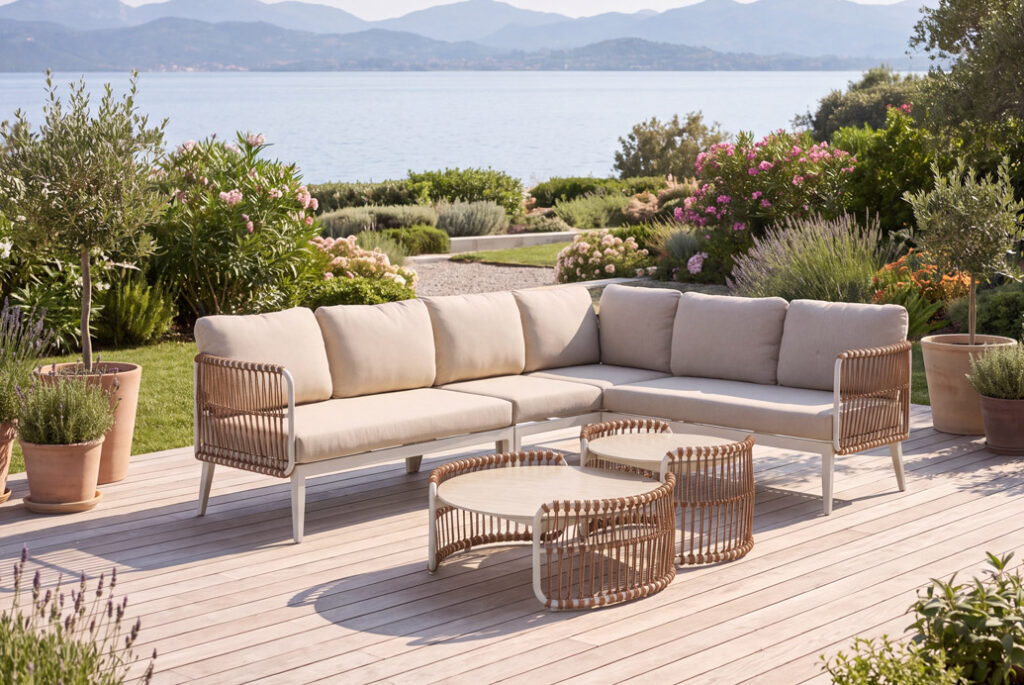
Best Outdoor Tabletop Materials in 2026: A B2B Guide to Glass, Stone, Teak, DPC & More
Outdoor furniture is becoming increasingly design-led, and the tabletop is playing a bigger role in defining the look, feel and market positioning of a collection.
For outdoor furniture wholesalers, retailers, hospitality buyers and furniture brands, choosing a tabletop material is no longer simply about durability.
Today, buyers are looking at a combination of:
Design + Outdoor Performance + Maintenance + Weight + Cost + Collection Compatibility
At the same time, the material itself is only part of the story. Surface finishes, colors, textures and material combinations are becoming increasingly important in outdoor furniture design.
A tempered glass tabletop, for example, can create completely different looks through painted finishes, silk-screen printing, wood-grain printing or stone-effect printing.
So, what are the key outdoor tabletop materials shaping the market in 2026?
From sintered stone and ceramic to travertine, tempered glass, teak, DPC, WPC, recycled HDPE and aluminum, each material offers a different balance of aesthetics, performance and commercial value.
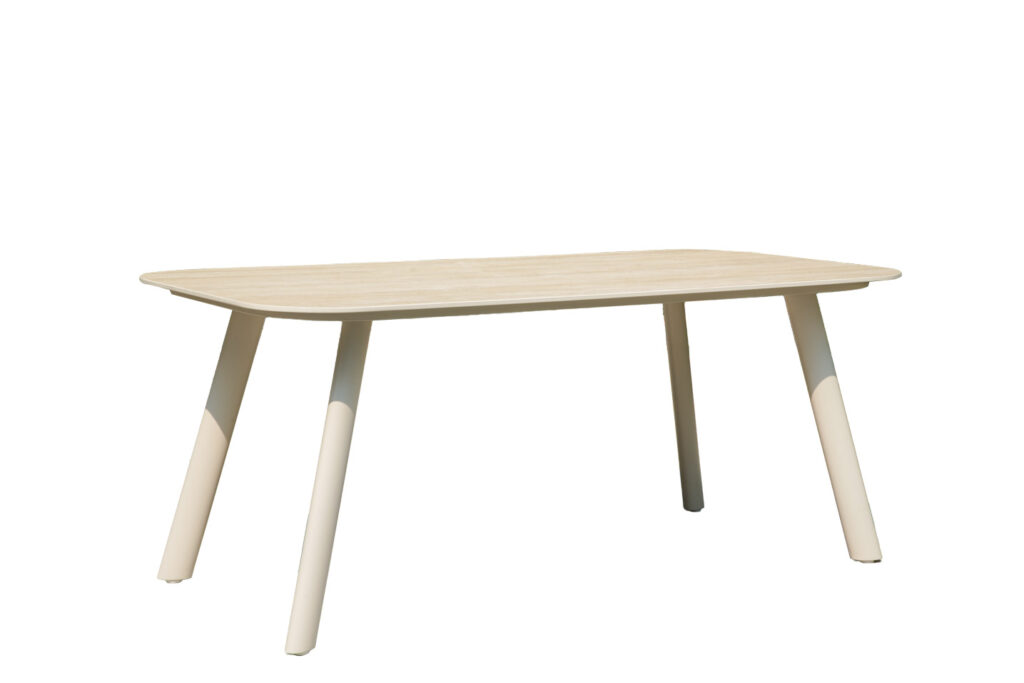
- Sintered Stone: A Strong Choice for Premium Outdoor Dining
Sintered stone has become an increasingly attractive choice for contemporary outdoor dining tables.
Its appeal comes from combining the visual depth of natural stone with an engineered surface suitable for modern outdoor applications.
Stone-inspired finishes can reproduce the appearance of marble, limestone, concrete and other mineral surfaces, giving outdoor dining tables a more architectural and premium appearance.
Recent outdoor furniture trend coverage also highlights ceramic and sintered stone as increasingly relevant tabletop choices, particularly because of their combination of natural-material aesthetics and practical performance.
Why B2B buyers consider sintered stone
- Premium stone appearance
- Modern architectural look
- Strong surface performance
- Easy everyday cleaning
- Wide range of stone-inspired finishes
- Excellent combination with aluminum frames
- Suitable for premium residential and hospitality furniture
Best suited for
Premium outdoor dining tables, contemporary garden furniture, hotels, resorts and design-led outdoor collections.
For B2B buyers, the same table structure can also potentially be offered with different surface finishes, creating different design directions and price levels.
- Ceramic & Porcelain: Stone Looks with Design Flexibility
Ceramic and porcelain tabletops are another important category in contemporary outdoor furniture.
Modern surface technology allows ceramic to reproduce the appearance of natural stone, marble and other architectural materials.
This gives designers greater freedom to create premium-looking outdoor furniture without relying entirely on solid natural stone.
A good example can be seen in Gloster’s 2026 outdoor collections, which include ceramic tabletop finishes inspired by natural stone, alongside teak, powder-coated aluminum and woven materials. Gloster 2026 Outdoor Furniture Collections
Why buyers choose ceramic or porcelain
- Stone and marble-inspired finishes
- Premium contemporary appearance
- Good resistance to everyday outdoor use
- Easy maintenance
- Wide range of colors and patterns
- Strong compatibility with aluminum furniture
Best suited for
Modern outdoor dining tables, premium residential furniture, hospitality projects and contemporary terraces.
Ceramic and porcelain also support the growing connection between indoor and outdoor design, allowing outdoor dining spaces to achieve a more residential and architectural appearance.
- Travertine & Natural Stone: Warm, Architectural and Premium

Natural stone brings something that printed or engineered materials cannot completely reproduce:
natural variation.
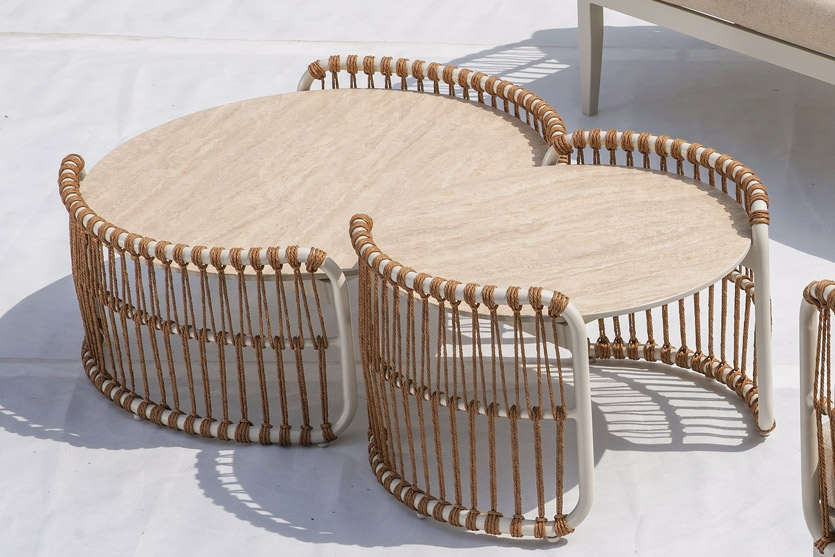
Travertine is particularly attractive for contemporary outdoor furniture because of its warm beige tones, soft mineral patterns and architectural character.
Current outdoor design trends are moving toward stone, wood, woven materials and warmer earthy colors, creating outdoor spaces that feel more natural and residential. Elle Decor — 2026 Outdoor Furniture Trends
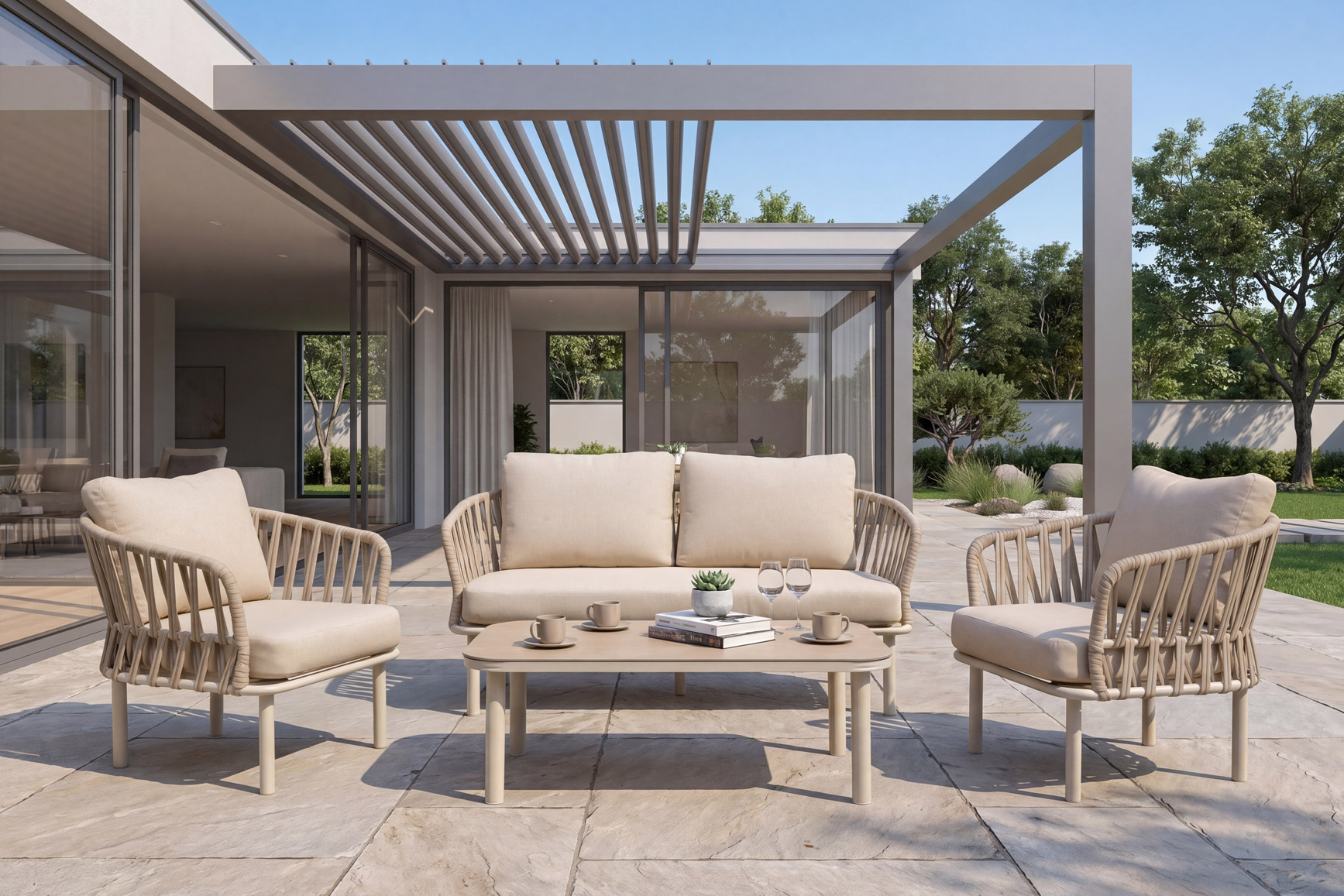
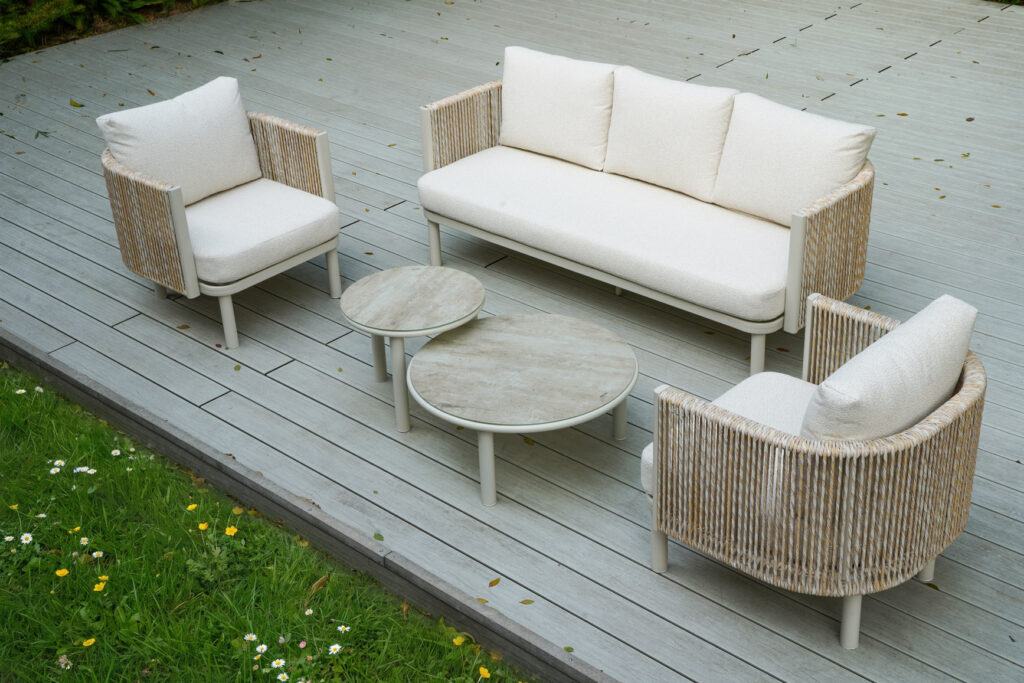
Travertine works especially well with modern aluminum and rope furniture because it creates a strong material contrast:
Clean structure + tactile weaving + natural stone
For example:
White Aluminum + Rope + Travertine
can create a softer and more sophisticated outdoor aesthetic than an all-metal design.
Why buyers choose travertine and natural stone
- Premium natural appearance
- Warm architectural character
- Unique surface variation
- Strong visual identity
- Works well with aluminum and rope
- Excellent for premium lounge collections
Best suited for
Outdoor coffee tables, premium dining tables, resorts, luxury residential projects and design-led collections.
Where weight or cost is a concern, stone-inspired alternative materials can also be considered to achieve a similar visual direction with different performance and logistics characteristics.
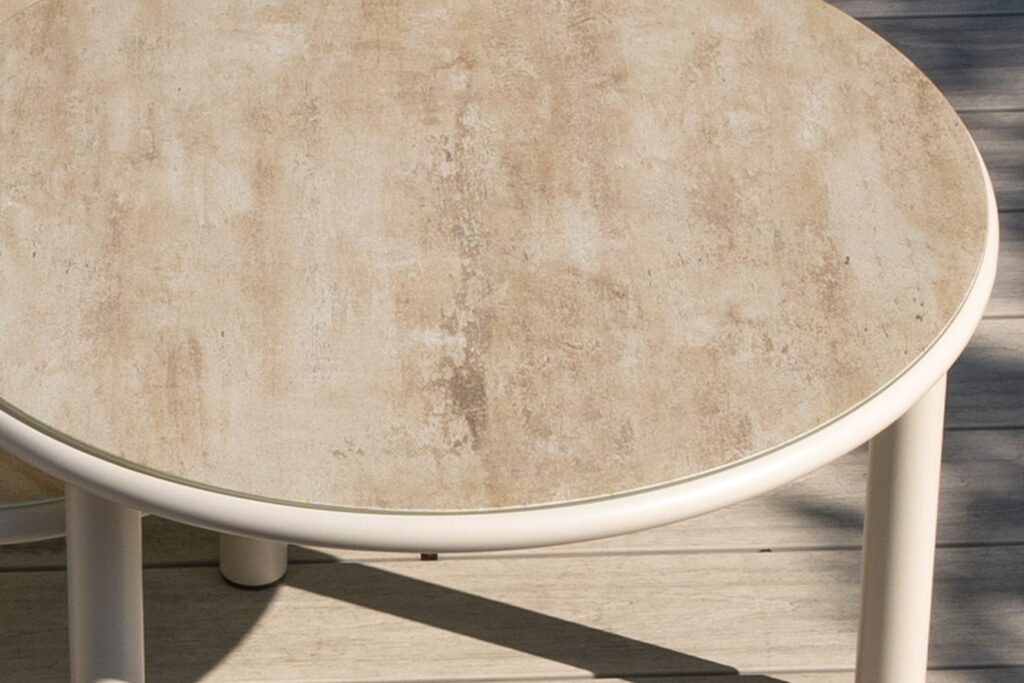
- Tempered Glass: A Flexible Surface for Different Designs
Tempered glass remains an important tabletop material in outdoor furniture.
However, modern outdoor furniture uses glass for much more than a simple transparent surface.
The glass can serve as a base for different colors, patterns and surface finishes, allowing manufacturers and furniture brands to create a wide range of visual effects.
Painted or Coated Glass
Painted glass can create clean solid-color surfaces such as white, black, beige, grey and other contemporary tones.
This works particularly well with modern aluminum frames.
Silk-Screen Printed Glass
Silk-screen printing can create decorative patterns, colors and textures on tempered glass.
This provides more design flexibility than a simple solid-color tabletop.
Wood-Grain Printed Glass
Wood-grain printing can reproduce the visual warmth of timber while maintaining the smooth and easy-clean characteristics of a glass surface.
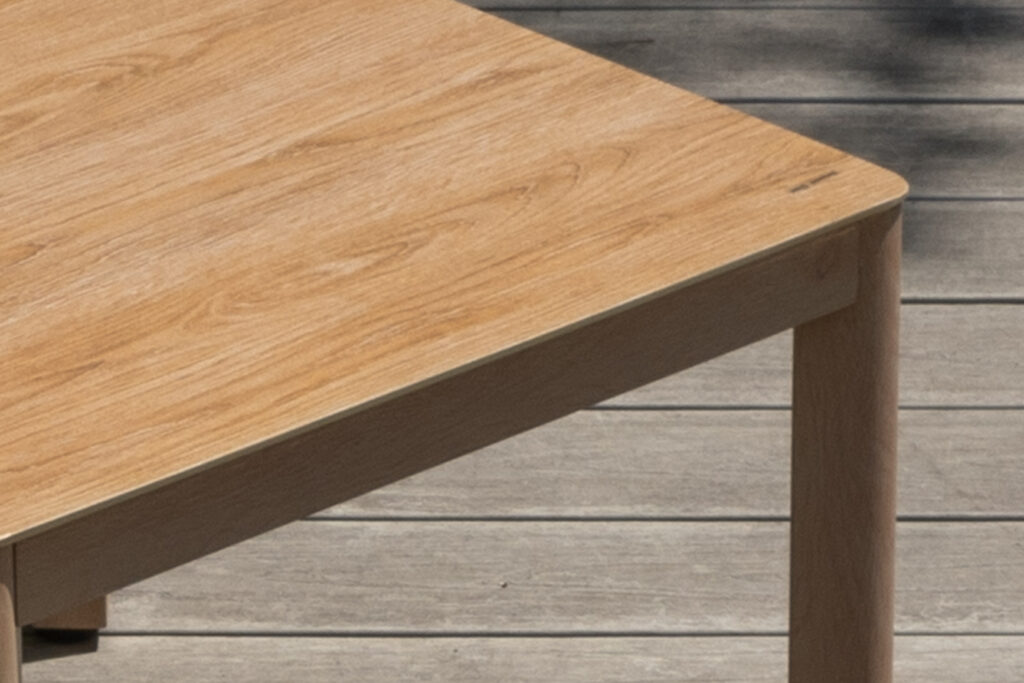
This can be an interesting option for buyers looking for:
Wood Appearance + Glass Surface
Stone-Effect Printed Glass
Digital or ceramic printing technology can also create marble, stone, terrazzo and other mineral-inspired patterns on glass.
For example, Gandía Blasco’s IRIS outdoor dining tables use tempered glass tops with vitrified digital printing, demonstrating how printed glass can become an important part of an outdoor furniture design. Gandía Blasco IRIS Dining Tables
Why buyers choose tempered glass
- Flexible surface design
- Multiple colors and patterns
- Wood, stone and decorative effects
- Smooth and easy-to-clean surface
- Visually lightweight
- Works well with aluminum frames
- Suitable for different price and design positions
Best suited for
Modern dining tables, contemporary patio furniture and design-led outdoor furniture collections.
For B2B buyers, one of the biggest advantages of glass is therefore not simply the material itself, but the variety of surface treatments that can create different product identities.
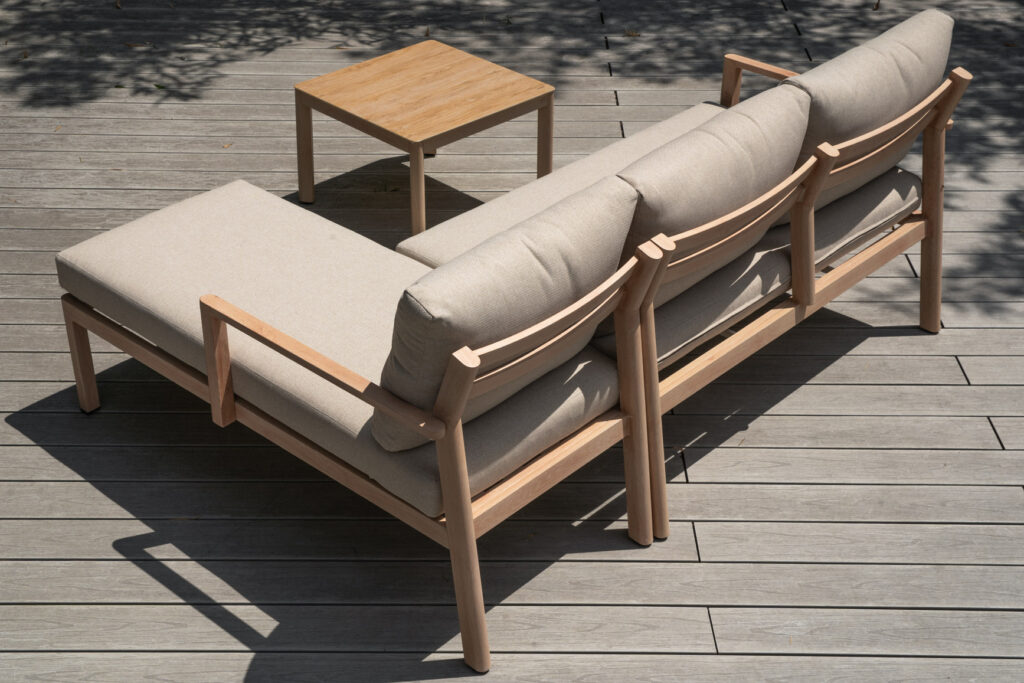
- Teak: A Timeless Natural Material
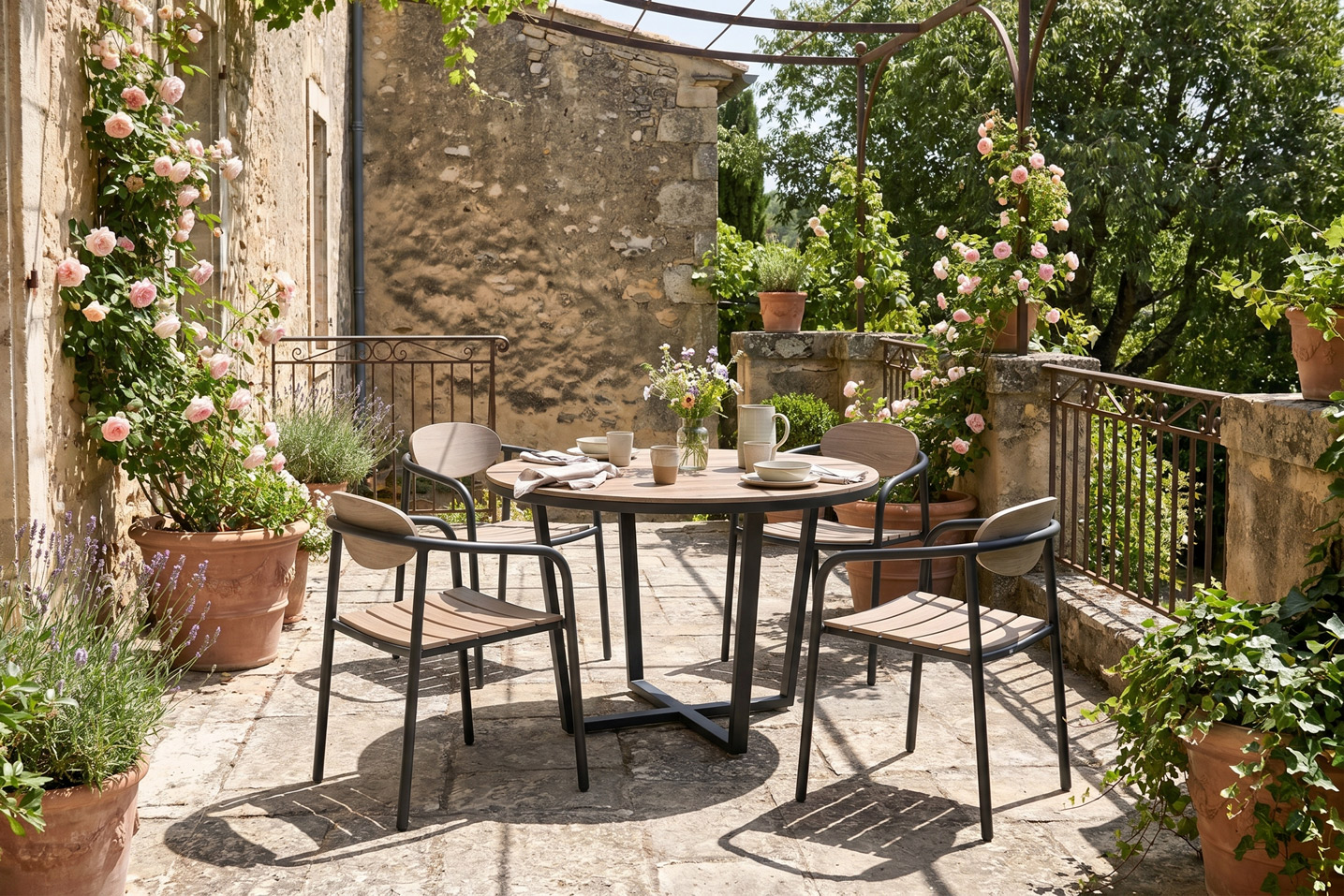
Teak remains one of the most recognizable materials in premium outdoor furniture.
Its natural grain and warm color create a strong connection with nature and traditional craftsmanship.
At the same time, contemporary collections are increasingly combining teak with modern materials rather than relying exclusively on all-teak construction.
Gloster’s 2026 outdoor collections combine teak with aluminum, ceramic and woven materials, providing a good example of how natural materials can be integrated into contemporary outdoor furniture. Gloster 2026 Outdoor Furniture Collections
Why buyers choose teak
- Warm natural appearance
- Premium positioning
- Timeless design
- Strong connection with outdoor living
- Works well with aluminum and rope
Best suited for
Premium outdoor dining tables, resorts, natural-style gardens, Mediterranean-inspired collections and high-end outdoor furniture.
For B2B buyers, sourcing, timber grade, certification and maintenance requirements remain important considerations.
- DPC: A Modern Wood-Look Composite Option
DPC is another material option worth considering for contemporary outdoor furniture.
Depending on its specific formulation and construction, DPC can provide a wood-inspired appearance with a more consistent and low-maintenance surface than traditional natural timber.
For outdoor furniture buyers, composite materials can be attractive when the goal is to combine a natural visual appearance with practical everyday use.
DPC can also work well with aluminum table frames, creating a modern combination of:
Aluminum Structure + Wood-Look Composite Surface
Why buyers consider DPC
- Wood-inspired appearance
- Consistent surface design
- Low-maintenance positioning
- Suitable for contemporary outdoor furniture
- Works well with aluminum structures
- Can provide an alternative to natural timber
Best suited for
Outdoor dining tables, garden furniture, modern patios, commercial outdoor spaces and furniture collections looking for a wood-look tabletop with practical maintenance requirements.
For B2B buyers, the exact performance of DPC should always be evaluated according to the specific material formulation, supplier specifications and intended outdoor environment.
- WPC & Recycled HDPE: Low-Maintenance Outdoor Living
WPC (Wood-Plastic Composite) and recycled plastic lumber are increasingly relevant alternatives for outdoor furniture.
They are particularly attractive to buyers looking for:
Wood-Look Appearance + Low Maintenance + Outdoor Durability
WPC can provide a timber-inspired appearance while reducing some of the maintenance associated with natural wood.
Another important category is recycled HDPE plastic lumber.
POLYWOOD is one of the best-known examples in this category. The company uses high-density polyethylene (HDPE) lumber made from recycled and reusable plastics for its outdoor furniture, positioning the material around durability, low maintenance and outdoor performance. POLYWOOD Outdoor Dining Table
Why buyers consider WPC or recycled HDPE
- Low maintenance
- Wood-inspired appearance
- Good outdoor durability
- Suitable for residential and commercial applications
- Can incorporate recycled material
- No regular staining or painting required for many products
Best suited for
Family outdoor furniture, coastal applications, commercial projects, hospitality and low-maintenance garden furniture.
For B2B buyers, this category can be particularly attractive where customers want the look of wood without the maintenance associated with natural timber.
- Aluminum: Lightweight and Commercially Practical
Aluminum remains one of the most important materials in outdoor furniture.
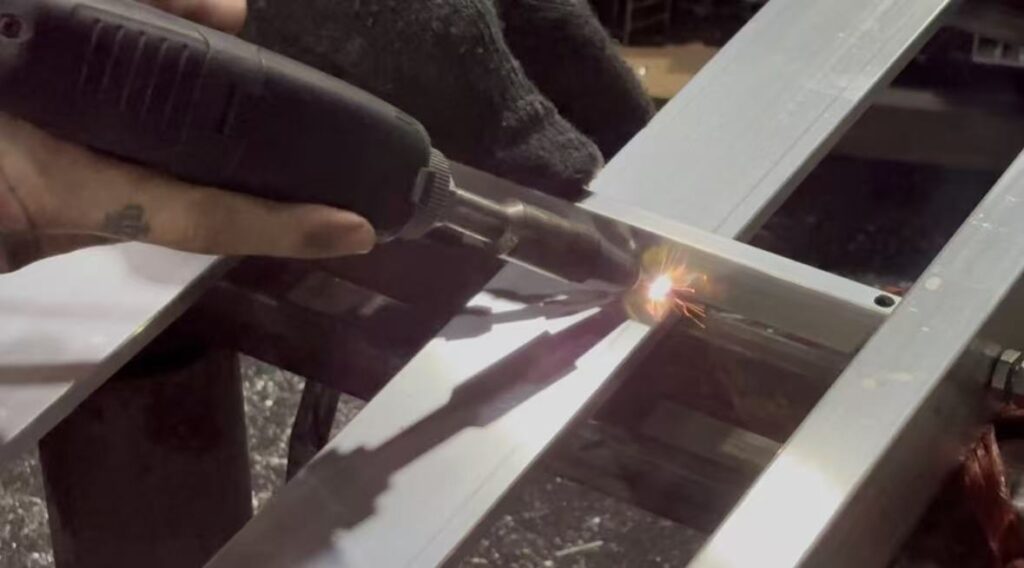
It is lightweight, corrosion resistant and highly compatible with powder coating and other finishing processes.
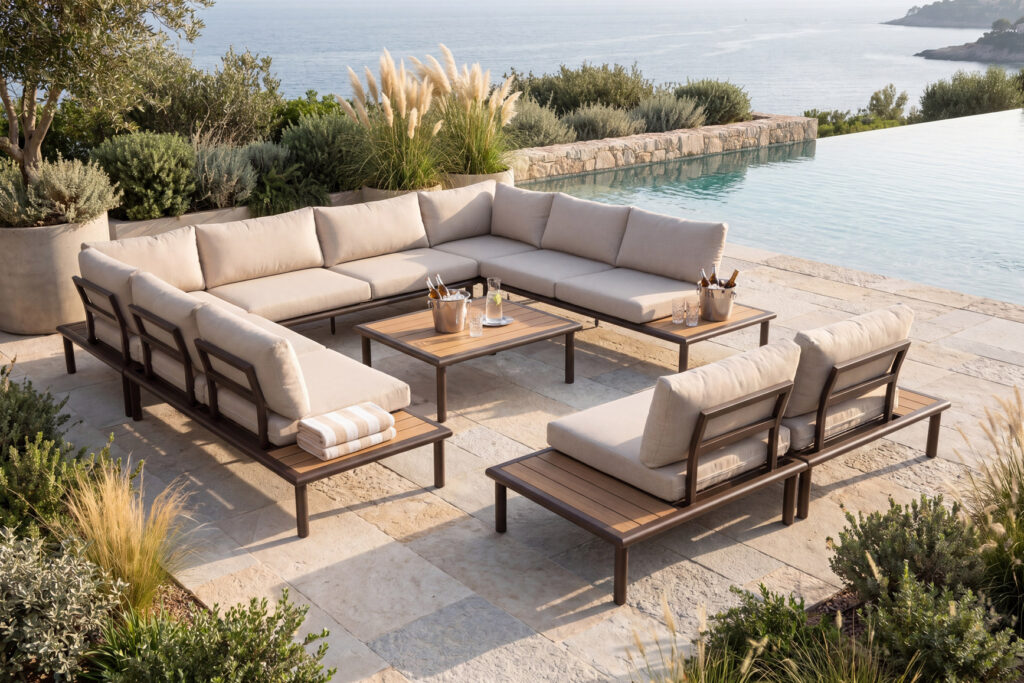
Aluminum can be used as both a table frame and tabletop, or as the supporting structure for ceramic, glass, stone-look, DPC and other tabletop materials.
Gloster’s materials portfolio includes powder-coated aluminum, ceramic, glass, rope and teak, illustrating how different materials can work together within contemporary outdoor furniture collections. Gloster Outdoor Furniture Materials
Why buyers choose aluminum
- Lightweight
- Corrosion resistant
- Easy maintenance
- Modern appearance
- Suitable for commercial programs
- Compatible with many tabletop materials
Best suited for
Commercial outdoor dining, restaurants, hotels, modern patio furniture and lightweight outdoor collections.
The 2026 Trend: The Surface Is Becoming Part of the Design
One of the most interesting developments in outdoor furniture is that material selection and surface treatment are becoming increasingly connected.
A tabletop is no longer simply:
Glass
It can become:
Glass + Wood Grain
Glass + Stone Print
Glass + Silk Screen
Glass + Solid Color
Likewise, ceramic can reproduce natural stone, while DPC and WPC can create wood-inspired surfaces.
This creates more options for furniture brands and B2B buyers.
Instead of creating a completely different table structure for every market, a furniture collection can potentially use a similar structural concept with different tabletop materials, colors and finishes.
This can help create different:
- Design styles
- Price levels
- Market positions
- Retail collections
- Hospitality solutions
Mixed Materials Are Becoming More Important
Another strong direction in 2026 is the move toward carefully considered material combinations.
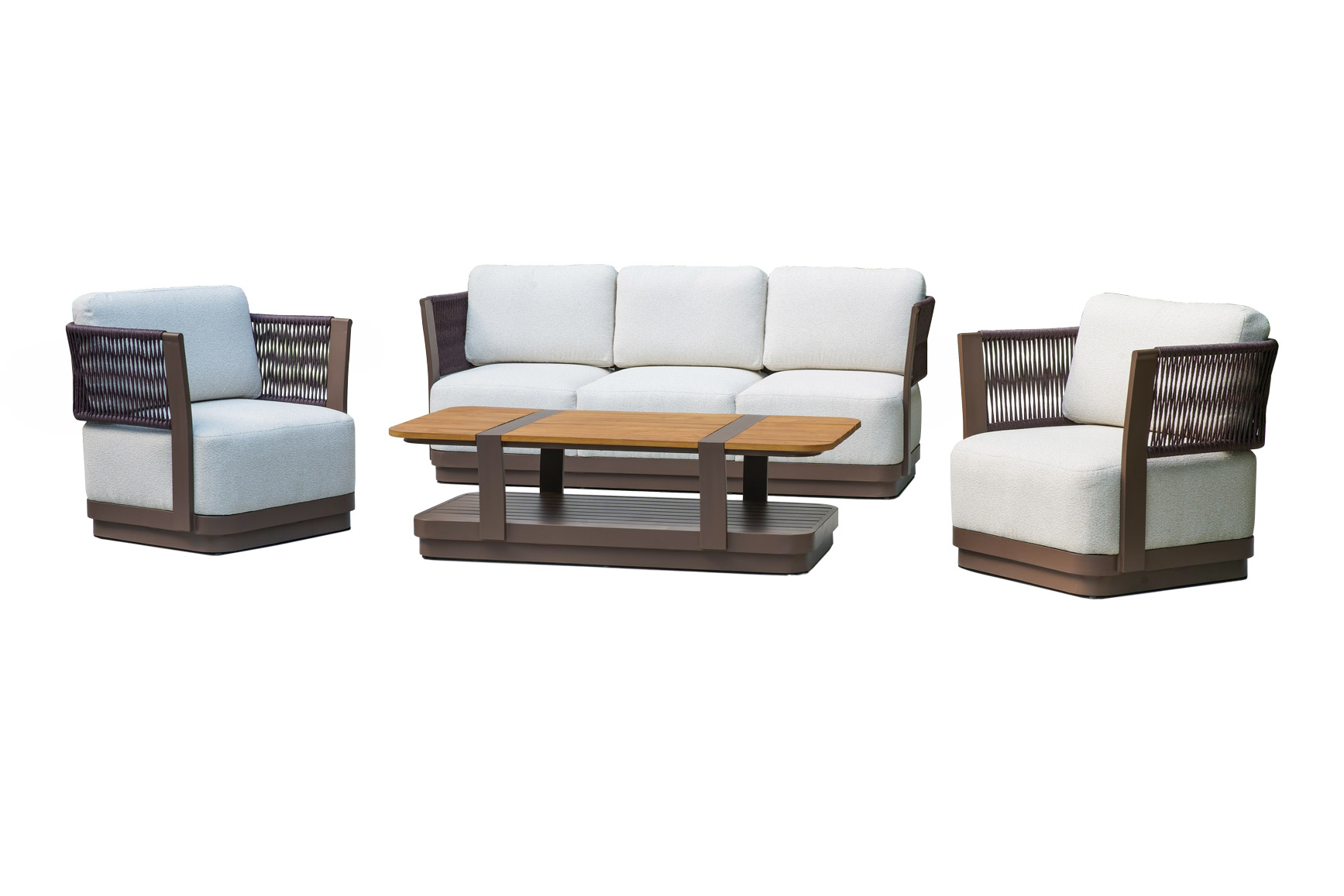
Outdoor furniture can combine:
Aluminum + Rope + Travertine
Aluminum + Teak
Aluminum + Ceramic
Rope + Teak + Stone
Aluminum + Printed Glass
Aluminum + DPC
2026 outdoor design coverage highlights the growing interest in natural materials, woven textures, stone, wood and warmer earthy tones. Elle Decor — 2026 Outdoor Furniture Trends
This is not simply about adding more materials.
The goal is to give each material a role:
Aluminum provides structure.
Rope provides texture.
Stone provides visual weight.
Wood provides warmth.
Glass provides visual lightness.
DPC and WPC provide practical wood-look alternatives.
This creates a more layered and sophisticated outdoor living environment.
What Should B2B Buyers Consider?
When selecting an outdoor tabletop material, wholesalers, retailers and hospitality buyers should consider:
- Target market
- Retail price
- Outdoor environment
- Surface performance
- Maintenance requirements
- Product weight
- Shipping efficiency
- Table frame construction
- Collection compatibility
- Design language
- Hospitality or residential application
- Expected product positioning
The best tabletop is therefore not necessarily the most expensive material.
It is the material that creates the right balance between:
Design + Performance + Cost + Logistics
Which Tabletop Material Is Right for Your Collection?
There is no single answer.
For premium modern design
Sintered Stone or Ceramic
For natural luxury
Travertine or Natural Stone
For classic warmth
Teak
For flexible visual customization
Tempered Glass with Printed or Coated Finishes
For wood-look, low-maintenance furniture
DPC, WPC or Recycled HDPE Lumber
For lightweight commercial furniture
Aluminum
The right choice depends on the target market, price positioning, outdoor environment and overall furniture design.
Final Thoughts
The outdoor tabletop market in 2026 is becoming more diverse.
Sintered stone and ceramic are increasingly important for premium contemporary dining.
Travertine and natural stone bring warmth and architectural character.
Teak continues to represent natural, timeless outdoor living.
Tempered glass is evolving through printing, coating and decorative surface technologies, giving furniture brands far more design possibilities than a simple transparent tabletop.
DPC, WPC and recycled HDPE provide wood-look alternatives for buyers looking for practical, low-maintenance outdoor solutions.
And aluminum remains an important choice for lightweight and commercial applications.
But perhaps the biggest opportunity is not choosing one material.
It is choosing the right combination of materials and finishes.
For modern outdoor furniture, the tabletop is no longer just a functional surface.
It is part of the design language of the entire collection.
Outdoor Furniture Materials by CHERISHOUTDOOR
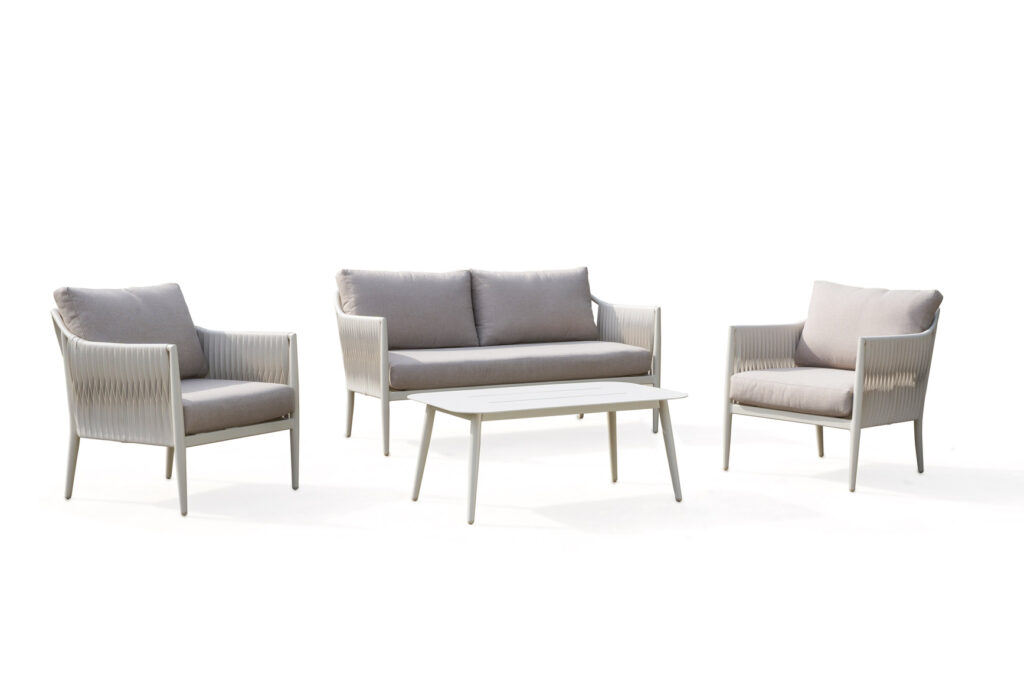
At CHERISHOUTDOOR, we focus on outdoor furniture collections built around aluminum structures, rope weaving and carefully selected tabletop solutions.
Depending on the design concept, target market and product positioning, we work with selected material suppliers to source suitable tabletop materials and finishes, including ceramic, stone-inspired surfaces, printed glass, DPC, WPC and other outdoor-ready options.
This approach allows us to explore different material combinations for different collections while balancing design, performance, cost and market requirements.
For wholesalers, retailers and hospitality buyers, the right tabletop is not simply a functional component.
It is part of the design language of the entire outdoor furniture collection.
 Outdoor Bistro Sets